
One Way Road Markings: What They Mean and How to Follow Them
One-Way Road Markings: What They Mean and How to Follow Them
One-way road markings help drivers understand which direction traffic should travel on a street or section of road. They are especially common in town centres, car parks and streets with limited space. Recognising them early can help you choose the correct lane, avoid turning the wrong way and keep other road users safe.
What are one-way road markings?
The most familiar one-way marking is a white arrow painted on the road, pointing in the direction traffic is permitted to travel. It may appear near the entrance to a one-way street, at a junction or on the approach to a traffic island. Arrows can also be repeated along the road to remind drivers of the direction of travel.
Road markings work alongside traffic signs. A blue one-way sign, usually showing a white arrow, indicates the direction in which vehicles must proceed. Drivers should check both signs and markings, as road layouts can change and markings may be less visible in poor weather or at night.
How to respond to a one-way arrow
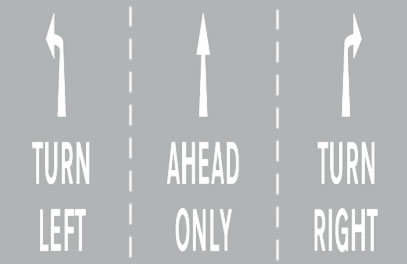
Follow the direction shown by the arrow and do not enter or travel along a road against the flow of traffic. At a junction, look ahead for signs and markings before turning. If a one-way street has more than one lane, lane arrows and signs may show which movements are allowed from each lane.
Do not assume that every arrow means the same thing. Some road arrows indicate that a lane is for a particular direction at a junction, rather than showing that the whole road is one-way. Read the surrounding signs and markings together, and follow any traffic signals or directions from authorised personnel.
One-way streets and other road users
One-way rules generally apply to drivers, motorcyclists and cyclists, but there can be signed exceptions. For example, a street may allow cyclists or buses to travel in the opposite direction using a marked contraflow lane. Only use such a lane if signs and road markings clearly permit it, and take extra care when joining or crossing it.
Be alert for pedestrians, cyclists and vehicles entering or leaving side roads. On a one-way street, pedestrians may be accustomed to traffic approaching from a single direction, but they can still be difficult to see around parked vehicles or at busy junctions.
What to do if you realise you are going the wrong way
If you accidentally enter a one-way street in the wrong direction, do not continue or attempt a sudden turn. Stop only if it is safe and legal to do so, avoid blocking traffic, and follow instructions from signs or traffic controllers. Never reverse for a significant distance or make a manoeuvre that puts other road users at risk. If necessary, find a safe place to turn around using the road layout.
Why clear one-way markings matter
Well-maintained one-way arrows and signs reduce confusion, support smoother traffic flow and help prevent head-on conflicts. They are particularly important at complex junctions, in areas with frequent deliveries and in car parks where vehicles may be moving in several directions.
Drivers should always remain observant, even where markings seem straightforward. Look for the next sign or arrow, allow plenty of time to choose the correct lane and follow the Highway Code and any temporary instructions in place.
Understanding One-Way Road Markings: Common Questions and Answers
- What markings are a one-way street?
- What does single line road marking mean?
- Can you get fined for going the wrong way on a one-way street?
- What are the 4 types of road markings?
- What are the road markings for one-way streets?
- What is a one-way system?
- How to tell if it’s a one-way road?
- Can traffic pass both ways on a one-way street?
What markings are a one-way street?
A one-way street is usually identified by white arrows painted on the road, pointing in the direction traffic must travel. These may be repeated along the street or placed near junctions, and are supported by blue road signs showing a white arrow. Always check signs and lane markings carefully, as arrows at junctions may indicate permitted lane movements rather than mean the entire road is one-way. Follow any temporary signs or instructions if the usual markings are unclear.
What does single line road marking mean?
A single white line can have different meanings depending on its pattern and location. A continuous solid white line generally means you must not cross or straddle it, except in specific circumstances set out in the Highway Code, such as entering premises or passing a stationary vehicle when it is safe. A broken white line usually marks the centre of the road or separates lanes; you may cross it when it is safe and permitted. On a one-way road, a single line may separate lanes travelling in the same direction, so check nearby arrows and signs to confirm which movements are allowed.
Can you get fined for going the wrong way on a one-way street?
Yes. In the UK, driving the wrong way along a one-way street can result in a penalty because it may mean failing to comply with a traffic sign, and could also be treated as careless or dangerous driving depending on the circumstances. The consequences may include a fine and penalty points, with more serious outcomes possible if the driving creates danger. If you realise you have entered the street in the wrong direction, do not continue or make a sudden manoeuvre; stop only when it is safe and follow the road layout or directions from traffic officers.
What are the 4 types of road markings?
Road markings are often grouped into four broad types: longitudinal markings, which run along the road to divide lanes or show where overtaking is restricted; transverse markings, such as stop lines and give-way lines; directional markings, including arrows that show permitted movements or indicate a one-way street; and warning or special markings, such as hatched areas, pedestrian crossings and bus or cycle-lane symbols. The exact categories can vary, but each type helps guide road users and improve safety.
What are the road markings for one-way streets?
One-way streets are commonly marked with white arrows painted on the road to show the direction traffic must travel. These arrows may appear at the entrance to the street, near junctions and along the route, and are used alongside one-way traffic signs. Always check the signs and markings before proceeding, as lane arrows may indicate permitted movements rather than the direction of the entire street. Follow any signed exceptions, such as a marked contraflow lane for buses or cyclists.
What is a one-way system?
A one-way system is a road or network of streets where traffic is permitted to travel in only one direction. It is usually indicated by signs and road markings, including arrows showing the direction vehicles must follow. One-way systems help manage traffic flow, reduce conflicts at junctions and make better use of limited road space. Always check the signs and markings, as some routes may allow exceptions for cyclists or buses.
How to tell if it’s a one-way road?
You can usually tell if a road is one-way by looking for a blue sign with a white arrow showing the permitted direction of travel, along with white arrows painted on the road. These may appear at the entrance to the street, near junctions or along the route. Check for signs and markings together, as lane arrows can indicate a permitted direction at a junction rather than a one-way street. If you are unsure, slow down, look carefully for further signs and never enter a road against the flow of traffic.
Can traffic pass both ways on a one-way street?
Generally, no: traffic on a one-way street must travel in the direction shown by its signs and road markings. Some streets have a signed contraflow lane that allows specified users, such as cyclists or buses, to travel in the opposite direction. Follow the signs and markings carefully, and never assume an exception applies unless it is clearly indicated.