
Disabled Space: Design, Markings and Accessibility in UK Car Parks
Disabled Parking Spaces: Design, Markings and Accessibility
A well-designed disabled parking space can make a significant difference to someone’s journey. It provides room to get in and out of a vehicle, access mobility equipment and travel safely between the car park and their destination. Clear positioning, suitable dimensions and visible markings all help make parking areas easier to use.
What is a disabled parking space?
A disabled parking space, often called an accessible parking bay, is a parking space intended for people who need additional space or a convenient route to a building. It may be used by a Blue Badge holder, although the rules for using bays can vary between public roads and private car parks.
Blue Badge holders should always check the signs and terms displayed at the location. A Blue Badge does not automatically mean that parking is free or unrestricted in every private car park.
Where should accessible bays be located?
Accessible parking spaces should be easy to find and situated as close as practicable to the entrance they serve. The route from the bay to the entrance should be step-free where possible, clearly marked and free from obstacles. Consideration should also be given to lighting, dropped kerbs and the position of pedestrian crossings.
Where a building has more than one accessible entrance, or serves different facilities, it may be helpful to provide bays near each relevant entrance. The right arrangement depends on the site, its users and the applicable design requirements.
Space, access and layout
An accessible bay needs to provide more than a place to park. Additional room alongside or at the end of the vehicle can help people transfer from a car, deploy a wheelchair ramp or use mobility equipment. The access area should be kept clear and should not be treated as an extra parking space.
There is no single layout that suits every site. Dimensions and access zones should be selected with reference to the relevant building regulations, design guidance and standards, as well as the needs of the people using the car park. A competent designer or access professional can help assess the site and recommend an appropriate layout.
Markings and signs
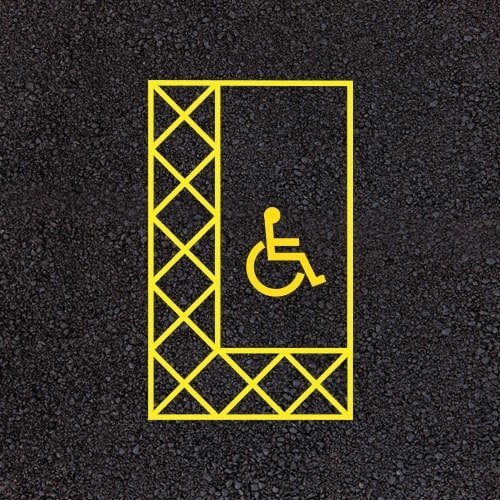
Clear markings help drivers identify accessible bays and understand where to park. Depending on the site, these may include a contrasting bay outline, a wheelchair symbol and a hatched access zone. Vertical signs can reinforce the message, particularly where markings may be less visible in poor weather or at night.
Markings should be legible, consistent across the car park and maintained in good condition. Worn paint, faded symbols or unclear signs can make a bay difficult to identify and may lead to access areas being obstructed. The colour and type of marking should be chosen to suit the surface and local requirements.
Keeping bays usable
Regular inspections help ensure accessible spaces remain available and safe to use. Site managers should check that:
- bay markings and signs are clear and in good repair;
- access zones are not blocked by vehicles, equipment or stored items;
- the route to the entrance is unobstructed;
- lighting and surface conditions remain suitable; and
- any parking rules are clearly displayed and consistently managed.
Planning or refreshing a disabled parking bay
Whether creating new accessible bays or renewing existing road and car park markings, begin by reviewing the whole journey from vehicle to destination. Consider the space needed to enter and leave the vehicle, the safest pedestrian route and the visibility of signs and markings. Requirements can differ between sites, so plans should be checked against current guidance and any relevant local or building requirements.
Thoughtful design and ongoing maintenance help make accessible parking more practical for the people who rely on it. Clear, well-positioned bays are an important part of a car park that works for everyone.
Disabled Parking Spaces and Disability Support: Frequently Asked Questions
- What makes a disabled parking space enforceable?
- What does a disabled parking space look like?
- What are some common reactions to a newly diagnosed illness or a recently acquired disability?
- What are some good life skills activities for adults with learning disabilities?
- How can it help to improve the quality of life of persons with disabilities?
- How big is a disabled space?
What makes a disabled parking space enforceable?
A disabled parking space is enforceable when it is clearly designated and supported by the rules that apply to the location. On a public road, this usually means the bay is covered by a traffic order and has the required signs and markings; enforcement is generally carried out by the local authority. In a private car park, the operator should display clear terms and conditions explaining who may use the bay and any consequences for misuse, and can enforce those terms in accordance with the law. A wheelchair symbol painted on the surface alone does not necessarily create an enforceable restriction, so requirements should be checked for the specific site.
What does a disabled parking space look like?
A disabled parking space is usually marked with a wheelchair symbol on the ground and may have a contrasting border or hatched access area to provide extra room for getting in and out of a vehicle. A nearby sign may also identify the bay and explain who can use it. Markings and colours vary between locations, so check the signs and parking terms displayed at the site.
What are some common reactions to a newly diagnosed illness or a recently acquired disability?
Reactions to a new diagnosis or recently acquired disability vary from person to person and may change over time. Some people feel shock, disbelief, fear, sadness, anger or uncertainty; others may feel relief at having an explanation, or focus on practical next steps. There is no single “right” way to respond, and feelings do not necessarily follow a set pattern. Taking time to adjust, talking with someone trusted and seeking support from healthcare professionals or relevant support organisations can help.
What are some good life skills activities for adults with learning disabilities?
Good life skills activities for adults with learning disabilities are practical, enjoyable and tailored to each person’s interests and support needs. They might include preparing a simple meal, making a shopping list, practising money skills, using public transport, planning a daily routine, keeping a home tidy or learning how to make appointments. Social activities—such as joining a club, playing a team game or practising communication in everyday situations—can also build confidence and independence. Activities should be introduced at a comfortable pace, with clear instructions and appropriate support, while encouraging each person to make choices and practise skills in real-life settings.
How can it help to improve the quality of life of persons with disabilities?
A clearly marked, conveniently located disabled parking space can make everyday journeys safer and less tiring for people with disabilities. By providing room to enter and leave a vehicle, use mobility equipment and reach an accessible route, it can reduce physical strain and make visits to work, shops, healthcare and social activities easier. Reliable access to suitable parking can support greater independence, confidence and participation in everyday life.
How big is a disabled space?
In the UK, an accessible parking bay is commonly around 2.4 metres wide and 4.8 metres long, with an additional access zone—often about 1.2 metres wide—alongside or between bays. The exact dimensions can vary depending on the site, layout and applicable guidance, so check the requirements for your project and make sure the access area remains clear.