
Deciphering the Significance of White Lines on the Road
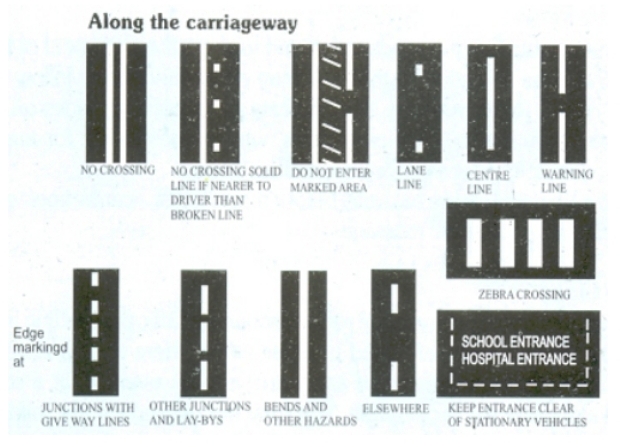
Understanding the Meaning of White Lines on Roads
White lines on roads play a crucial role in guiding and regulating traffic flow. They serve as visual cues for drivers, indicating where they should drive, where they should not, and when caution is required. Understanding the meaning of these white lines is essential for safe and efficient driving.
Solid White Line
A solid white line indicates that lane changes are discouraged. Drivers should stay within their lane and not cross the line unless it is necessary for safety reasons, such as avoiding a hazard or merging onto another road.
Dashed White Line
A dashed white line typically separates lanes of traffic moving in the same direction. Drivers are allowed to cross over dashed white lines when it is safe to do so, such as when changing lanes or entering/exiting a motorway.
Double White Lines
Double white lines consist of two parallel solid white lines. These lines are used to separate traffic flows moving in the same direction but indicate stricter restrictions compared to a single solid white line. Crossing double white lines is usually prohibited except in cases of emergency or when directed by road signs or traffic officers.
White Zigzag Lines
White zigzag lines are often found near pedestrian crossings and indicate areas where parking is prohibited or restricted. Drivers should never park on or near white zigzag lines to ensure pedestrian safety and maintain smooth traffic flow.
In conclusion, understanding the meaning of white lines on roads is essential for all road users. By following these markings and adhering to their intended purposes, drivers can contribute to safer roads and smoother traffic operations.
Understanding Road Markings: Decoding the Meaning of White Lines on UK Roads
- What does a solid white line on the road mean?
- Can I cross over a dashed white line?
- What do double white lines on the road signify?
- Why are there zigzag white lines near pedestrian crossings?
- Are there any exceptions to crossing double white lines?
- Can I change lanes over a solid white line?
What does a solid white line on the road mean?
A solid white line on the road signifies that lane changes are discouraged and drivers should remain within their lane. Crossing over a solid white line is generally not permitted unless it is necessary for safety reasons, such as avoiding an obstacle or merging onto another road. It serves as a visual indication to drivers to maintain their current lane and exercise caution when driving. Understanding and respecting the meaning of a solid white line helps promote safer and more orderly traffic flow on the roads.
Can I cross over a dashed white line?
When faced with a dashed white line on the road, drivers often wonder whether they are allowed to cross over it. In general, a dashed white line separates lanes of traffic moving in the same direction and indicates that drivers are permitted to cross over it when it is safe to do so. This flexibility allows for lane changes, merging onto motorways, or entering/exiting junctions when necessary. However, caution should always be exercised when crossing over dashed white lines to ensure the safety of all road users.
What do double white lines on the road signify?
Double white lines on the road signify stricter restrictions compared to single solid white lines. These lines consist of two parallel solid white lines and are used to separate traffic flows moving in the same direction. Crossing over double white lines is usually prohibited except in cases of emergency or when directed by road signs or traffic officers. It is important for drivers to adhere to the restrictions imposed by double white lines to ensure safety and maintain smooth traffic flow on the roads.
Why are there zigzag white lines near pedestrian crossings?
The zigzag white lines near pedestrian crossings serve as a safety measure to ensure clear visibility and space for pedestrians crossing the road. These markings indicate areas where parking is prohibited or restricted to maintain a clear line of sight for both pedestrians and drivers. By keeping these zones free from parked vehicles, drivers are better able to anticipate and yield to pedestrians approaching or crossing the road, enhancing overall safety at pedestrian crossings.
Are there any exceptions to crossing double white lines?
When it comes to crossing double white lines on the road, there are limited exceptions that drivers should be aware of. In general, crossing over double white lines is prohibited due to safety reasons and to maintain traffic flow. However, there are specific circumstances where drivers may be allowed to cross double white lines, such as during emergencies or when directed by road signs or traffic officers. It is crucial for drivers to exercise caution and only cross double white lines when absolutely necessary and safe to do so, keeping in mind that these exceptions are rare and should be followed with care and responsibility.
Can I change lanes over a solid white line?
When faced with a solid white line on the road, it is important to understand that changing lanes over a solid white line is generally discouraged. Solid white lines indicate that lane changes should be avoided unless necessary for safety reasons, such as to avoid a hazard or merge onto another road. It is advisable for drivers to stay within their lane when encountering a solid white line to maintain traffic order and safety on the road.